Screen Time Hacks
Managing your family's relationship with technology isn't about eliminating screens—it's about creating intentional, healthy boundaries that serve your family's values and goals.
From educational apps for toddlers to social media for teenagers, technology offers both incredible opportunities and serious pitfalls. The key is developing family tech policies that protect your children while preparing them for a digital world.
Key Statistics
Screen time management represents one of the most common sources of parent-child conflict in modern families.
95% of U.S. teens have access to smartphones, with 45% reporting "almost constant" internet use
71% of parents report daily arguments about screen time with their children

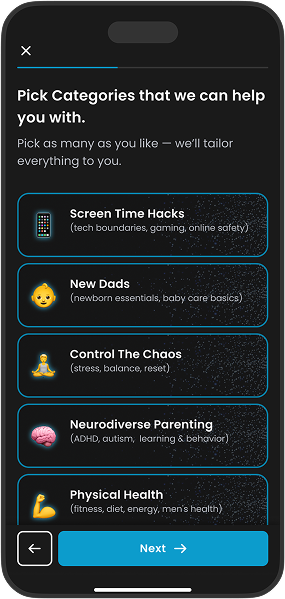
How We Help With Screen Time
DadHack's AI advisor helps you create age-appropriate screen time boundaries and teach digital citizenship skills. Learn how to leverage technology's benefits while protecting your children from its potential harms, including online safety and healthy usage habits.
DadHack provides real-time support for tech-related conflicts, helps you track and optimize family screen time patterns, and offers conversation starters for discussing digital responsibility—giving you tools to raise tech-savvy children with healthy boundaries.
3 Research-Based Screen Time Strategies
Designated screen-free areas (like bedrooms) and times (like meals) protect sleep, family connection, and face-to-face communication skills.
Educational, creative, and social connection content provides more value than passive entertainment, helping children develop skills while using screens.
Children learn more from watching your screen habits than from listening to your rules. Conscious modeling of balanced tech use is essential.
Breakthrough Results You Can Expect

The App Today


Your AI dad expert in your pocket – helping you navigate technology in ways that strengthen rather than divide your family
FAQ

DadHack provides age-specific guidelines based on current research, plus tools for assessing whether your child's screen time is supporting or hindering their development. Quality matters as much as quantity.
We offer strategies for negotiating reasonable boundaries with teens while teaching them self-regulation skills they'll need as adults. The goal is internal motivation, not external control.
DadHack provides comprehensive online safety strategies, including parental controls, conversation starters about digital dangers, and ways to maintain open communication about their online experiences.
We help you distinguish between productive screen use and recreational use, plus strategies for managing the necessary digital aspects of modern childhood while maintaining healthy boundaries.
DadHack helps you model healthy boundaries between necessary screen use and recreational use. Being transparent about your screen use and your own efforts to manage it can be powerful teaching moments.