Growing Independence
The goal of parenting isn't to create children who need you forever—it's to raise capable adults who choose to stay connected because they want to, not because they have to.
Building independence is a delicate balance between providing support and allowing natural consequences. From basic self-care skills to complex decision-making abilities, children need gradual opportunities to develop competence and confidence.
Key U.S. Statistics
Overprotective parenting is associated with lower self-efficacy and poorer emotional regulation in young adults.
Children who learn independence skills early show significantly better problem-solving abilities as adults
Kids with age-appropriate responsibilities develop stronger work ethic and resilience

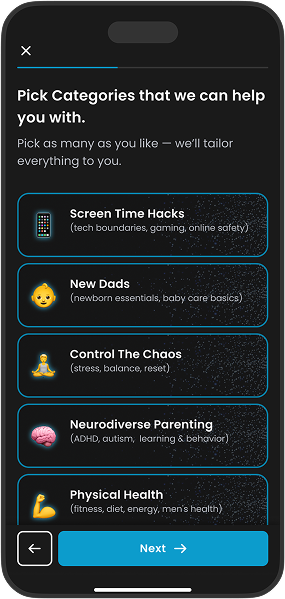
How We Help With Growing Independance
DadHack's AI advisor provides age-appropriate strategies for teaching friendship skills, from basic sharing for toddlers to complex social navigation for teenagers. Learn how to coach your children through friendship challenges without solving their problems for them.
DadHack offers guidance for specific friendship crises, helps you understand when to intervene versus when to let kids work things out, and provides conversation starters for discussing social situations—giving you tools to raise socially confident children.
3 Research-Based Ways to Build Independence
Breaking complex skills into smaller steps allows children to build confidence and competence gradually without becoming overwhelmed.
Letting children experience the results of their choices (within safe parameters) teaches decision-making better than lectures or punishments.
Focusing on the process of working through challenges builds resilience and encourages children to tackle difficult tasks independently.
Breakthrough Results You Can Expect

The App Today


Your AI dad expert in your pocket – helping you raise capable, confident children ready for the world
FAQ

DadHack helps you assess age-appropriate risks and independence levels. We provide guidelines for different developmental stages and personality types, plus frameworks for making decisions about when to step in versus step back.
We offer strategies for making responsibility feel empowering rather than burdensome, plus techniques for gradual introduction of new expectations. Often resistance comes from feeling overwhelmed or unprepared.
Independence doesn't mean disconnection. DadHack teaches you how to shift from managing your child's life to consulting on it. This actually often strengthens relationships because children feel respected and valued.
Poor choices are part of learning. DadHack helps you determine which mistakes are valuable learning experiences and which require intervention. We provide frameworks for debriefing choices without shaming.
Every child develops at their own pace. DadHack helps you assess your individual child's readiness rather than comparing to others. We provide strategies for building the underlying skills that support independence.