Effective Communication
Your words shape your child's inner voice—the one they'll carry with them long after they've left your house.
Communication breakdowns are behind most family conflicts, behavioral issues, and relationship struggles. Whether your kids are toddlers having meltdowns or teenagers giving you the silent treatment, how you communicate determines whether problems get solved or escalate.
Key Statistics
62% of parents say being a parent has been at least somewhat harder than they expected, with communication challenges being a primary factor
30% of mothers and 20% of fathers say being a parent has been "a lot harder" than expected
Finnish research shows children's academic socialization, including parent communication about education expectations, strongly predicts educational achievement regardless of socioeconomic background

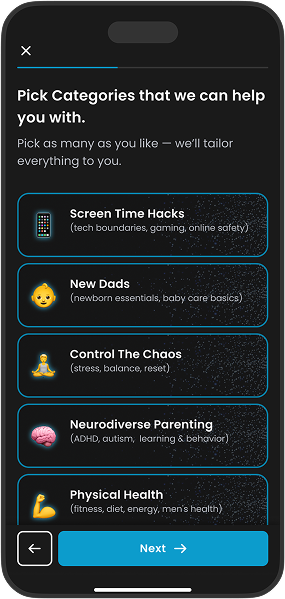
How We Help
DadHack's AI advisor teaches you communication techniques that actually work with kids of all ages. Learn active listening skills, conflict de-escalation methods, and how to have difficult conversations that strengthen rather than damage your relationships.
DadHack provides real-time communication advice during heated moments, helps you practice difficult conversations before they happen, and tracks communication patterns that work best with each of your children—giving you the tools to connect rather than just correct.
3 Research-Based Communication Strategies
Children are more likely to open up and accept guidance when they feel heard and understood before receiving solutions or corrections.
Expressing your feelings and needs without blame reduces defensiveness and keeps conversations productive rather than combative.
First Acknowledging and reflecting your child's emotions before addressing behavior helps them feel validated and creates openness for problem-solving.
Breakthrough Results You Can Expect

The App Today


Your AI dad expert in your pocket – helping you connect with your kids through words that heal and strengthen
FAQ

Teenagers often communicate indirectly or through behavior rather than words. DadHack teaches you how to recognize these signals, create safe spaces for conversation, and respond in ways that keep the door open rather than slamming it shut.
We provide techniques for emotional regulation and repair strategies when conversations go off track. Learning to model recovery from mistakes actually strengthens relationships and teaches your children that repair is possible.
Sometimes our intention to help comes across as criticism or judgment. DadHack helps you approach difficult conversations with curiosity rather than solutions, which often opens up more honest communication.
We provide age-appropriate frameworks and scripts for handling difficult conversations. The key is being honest while providing appropriate reassurance and being available for ongoing questions and processing.
Disrespect often signals that a child feels unheard or powerless. DadHack teaches you how to address the underlying need while still maintaining boundaries around respectful communication. Sometimes changing your approach dramatically changes their response.