Control The Chaos
Parenting often feels like juggling flaming torches while riding a unicycle—and someone just handed you three more torches.
Between work deadlines, school pickups, household management, and the mounting pressure to be the 'present father' everyone talks about, modern dads are drowning in daily chaos.
Key Statistics
American fathers now spend an average of 7.8 hours per week on childcare, representing a significant increase from previous decades.
Fathers report being tired (34%) and stressed (24%) all or most of the time
College-educated fathers average over 10 hours per week, demonstrating growing father involvement across all demographics.

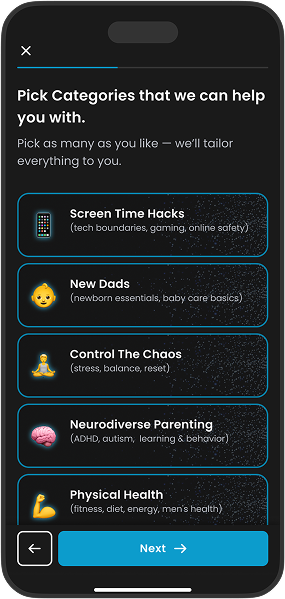
How We Help Control The Chaos
DadHack's AI advisor helps you develop systems and strategies to regain control of your daily chaos. Learn time management techniques, stress reduction methods, and organizational systems that actually work for busy dads—not just productivity gurus.
DadHack provides instant support during overwhelming moments, helps you identify chaos patterns and triggers, and creates personalized action plans that bring order to your daily routine—giving you back the mental space to actually enjoy being a dad.
3 Research-Based Ways to Control Daily Chaos
Scheduling specific time slots for important tasks prevents the day from getting hijacked by urgent but less important demands.
Consistent morning and evening routines reduce decision fatigue and create predictable structure that helps everyone function better.
If something takes less than 2 minutes, do it immediately. This prevents small tasks from accumulating into overwhelming chaos.
Breakthrough Results You Can Expect

The App Today


Your AI dad expert in your pocket – helping you regain control and find calm in the storm
FAQ

DadHack starts with micro-changes that take 30 seconds to implement. Small improvements compound quickly without requiring major time investments. We focus on systems that save more time than they take to maintain.
We provide strategies for gradual implementation and getting family buy-in. Change works best when everyone understands the benefits and feels involved in creating solutions. Start with one small change and build momentum.
DadHack helps you identify the patterns behind recurring "emergencies" and build buffer systems that prevent many crises from occurring. We teach you how to spot early warning signs and address issues before they become urgent.
While you can't control work chaos, you can create islands of predictability in your family life. DadHack shows you how to build flexible routines that can adapt to schedule changes while maintaining core stability.
Absolutely! Jordan excels at burnout prevention by helping you recognize early warning signs and implement protective strategies before reaching complete exhaustion. This includes stress management, workload organization, energy management, and building sustainable work habits before burnout develops.